How Will China’s Auto Industry Tackle Its Oversupply Crisis?
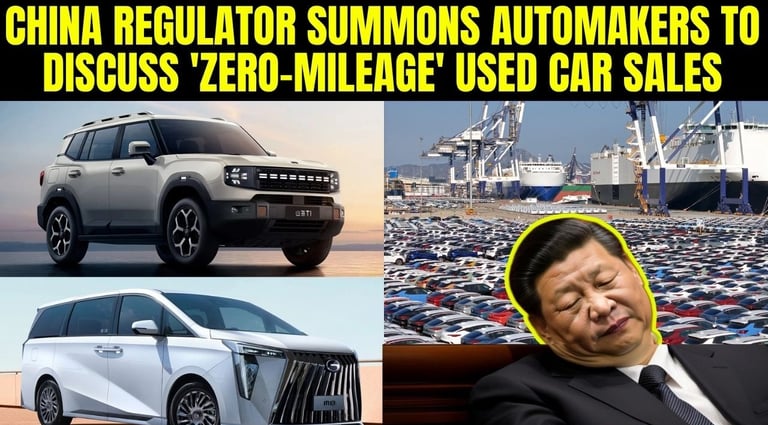
Recently, car dealerships in China have been using a controversial strategy — selling brand-new cars as “used” with zero kilometers on the odometer at heavy discounts. The goal is to clear out inventory and inflate sales figures. However, the Beijing government has now taken a strict stance against this practice. The People’s Daily, a government-aligned publication, has strongly criticized it, calling it harmful to profit margins and a long-term threat to the stability of the auto industry.
Yogesh
9/4/20251 min read
Why is this happening?
Falling demand: According to Deloitte, China is responsible for more than a third of global manufacturing. But as domestic demand weakens, dealership lots are overflowing, pushing car prices down.
Impact of the price war: Companies like BYD have already slashed prices significantly. Now, by selling zero-mile “used” cars, they are distorting the market even further.
Export barriers: The U.S. has imposed high tariffs on Chinese EVs — 100% under the Biden administration in 2024, and possibly up to 145% under Trump in 2025 — severely restricting exports.
What is Beijing’s response?
A recent meeting between Chinese regulators and automakers signaled that the government plans to ban these “zero-mile used car” sales. This move is aimed at stabilizing the market, but it could worsen the current challenges faced by carmakers.
Benefit or harm?
Potential harm:
Inventory may pile up further.
Manufacturing might slow down.
Cash flow could be disrupted for carmakers.
Possible benefits:
Market trust could be restored.
Long-term profitability may improve.
Price stability could return.
Conclusion:
Beijing’s move may create short-term pressure on car companies, but in the long run, it could prove beneficial for the stability and credibility of China’s auto industry. The key question now is how manufacturers will adapt their production and inventory management strategies to align with the new regulations.